
Backlinks continue to play a major role in SEO, but one question often discussed among marketers is whether “link stability” affects Google rankings. Many SEO professionals believe that backlinks staying live for a long time can improve trust and visibility in search results. But does Google actually treat link stability as a direct ranking signal?
The answer is not completely straightforward.
Google has never officially confirmed that link stability itself is a ranking factor. However, stable backlinks can indirectly support stronger SEO performance because they help build authority, trust, and consistency over time.
Understanding Link Stability in SEO
Link stability refers to how long a backlink remains active without major changes. A stable backlink usually:
- Continues pointing to the same page
- Uses consistent anchor text
- Stays on an indexed page
- Remains accessible for users and search engines
When backlinks are frequently removed, replaced, or changed, it creates what SEO experts call “link churn.”
Search engines understand that websites naturally update content, redesign pages, and remove outdated links. However, excessive link changes can sometimes appear manipulative if they happen unnaturally.
Does Google Directly Use Link Stability?
Google focuses primarily on quality signals rather than the simple lifespan of a backlink.
Its algorithms evaluate factors such as:
- Relevance of the linking website
- Authority of the referring domain
- Natural link placement
- User value
- Content quality
- Overall trustworthiness
A fresh backlink from a highly authoritative website can improve rankings quickly, while an old low-quality backlink may offer little value.
This shows that Google cares more about the context and quality of links rather than how long they exist.
Why Stable Backlinks Still Matter
Even if link stability is not officially confirmed as a ranking factor, stable backlinks still provide several SEO advantages.
Builds Long-Term Website Authority
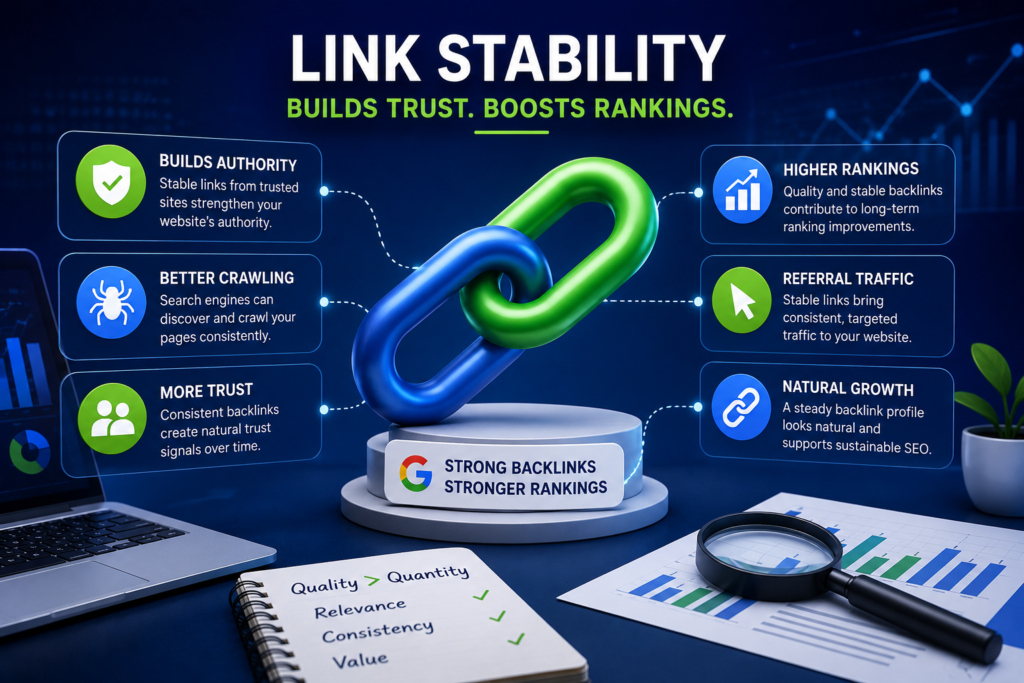
Backlinks that stay live for years usually come from trustworthy and relevant websites. These links strengthen your domain authority gradually and create a more natural backlink profile.
Google prefers websites that earn links consistently over time instead of websites using aggressive short-term link-building tactics.
Supports Better Crawling
Search engines use backlinks to discover and revisit pages. Stable backlinks help search engine crawlers continuously access your content, which can improve indexing and visibility.
When important backlinks disappear frequently, it may reduce crawling opportunities for some pages.
Creates Natural SEO Signals
A healthy backlink profile grows naturally. Websites that rapidly gain and lose hundreds of links can appear suspicious.
Stable links often indicate genuine recommendations from other websites rather than manipulated SEO activity.
Helps Generate Referral Traffic
Backlinks are not only useful for rankings. Relevant backlinks can also send targeted visitors to your website for months or even years.
A stable backlink from a popular blog or niche website can continue delivering valuable traffic long after it is created.
Link Quality Matters More Than Link Stability
Many website owners focus too much on getting permanent backlinks while ignoring overall quality.
In reality, backlink quality remains far more important.
Google values backlinks that are:
- Relevant to your industry
- Placed naturally inside content
- Coming from trusted websites
- Helpful for users
- Editorially earned
A contextual backlink from a relevant article is significantly stronger than a long-term backlink placed randomly on unrelated websites.
This is why modern SEO strategies focus on authority and relevance instead of simply chasing permanent links.
Can Frequent Link Changes Affect Rankings?
Frequent backlink changes are not automatically harmful because the internet constantly evolves. Websites update pages, remove outdated content, and refresh their structure regularly.
However, excessive manipulation can become risky.
Some unhealthy SEO practices include:
- Buying temporary backlinks in bulk
- Constantly changing anchor text
- Using automated link-building systems
- Participating in link exchange schemes
- Removing and replacing backlinks aggressively
Google’s spam detection systems are designed to identify unnatural linking behavior. Websites using manipulative backlink strategies may experience ranking drops or manual penalties.
The safest approach is always to focus on natural and relevant link acquisition.
Are Temporary Backlinks Useless?
No, temporary backlinks can still provide value.
Many natural backlinks are temporary by nature, including:
- News mentions
- Seasonal campaign links
- Event sponsorships
- Trending blog references
- Promotional collaborations
Even short-term backlinks from authoritative websites can improve visibility, drive traffic, and increase brand exposure.
What matters most is whether the backlink appears naturally and provides value to users.
Best Practices for Building Stable Backlinks
If you want sustainable SEO growth, focus on long-term link-building strategies rather than quick wins.
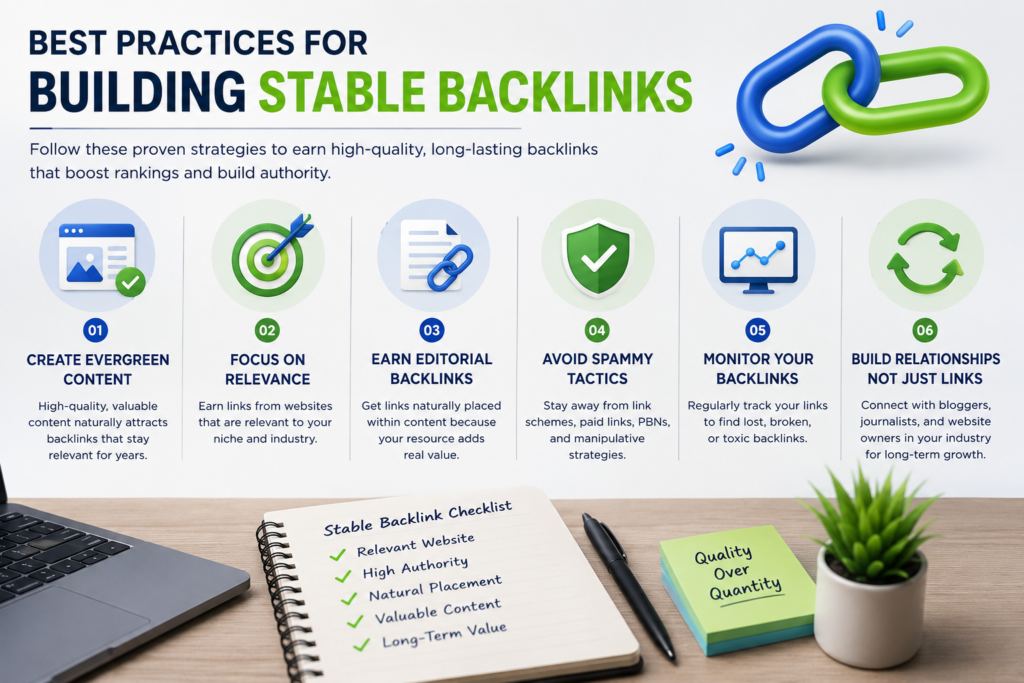
Publish Evergreen Content
Evergreen content continues attracting backlinks over time. Detailed guides, research-based articles, tutorials, and case studies often earn stable backlinks naturally.
Prioritize Niche-Relevant Websites
Backlinks from websites within your industry carry stronger relevance and trust signals.
For example, a digital marketing website linking to an SEO service provider is more valuable than unrelated backlinks from random niches.
Focus on Editorial Backlinks
Editorial backlinks placed naturally inside useful content are among the strongest types of backlinks.
These links are harder to obtain but offer better long-term SEO value.
Avoid Spammy Link Building
Google discourages manipulative backlink practices designed purely to influence rankings.
Avoid:
- Private blog networks
- Low-quality directory submissions
- Mass forum spam
- Automated backlinks
- Paid link schemes
These tactics may provide temporary improvements but can damage long-term SEO performance.
Monitor Your Backlink Profile
Regular backlink monitoring helps identify:
- Lost backlinks
- Broken pages
- Toxic backlinks
- Anchor text issues
SEO tools like Google Search Console, Ahrefs, and SEMrush can help maintain a healthy backlink profile.
The Future of Backlinks in SEO
Backlinks still remain an important ranking factor, but Google’s algorithms are becoming smarter every year.
Modern search systems evaluate:
- Content helpfulness
- User intent
- Topical authority
- Natural link patterns
- Website trustworthiness
This means SEO success today depends more on creating value rather than simply building large numbers of backlinks.
Stable backlinks can strengthen your authority, but they work best when combined with high-quality content and a strong overall SEO strategy.
Final Thoughts
Link stability alone is not a confirmed Google ranking factor, but it can still contribute indirectly to better SEO performance.
Stable backlinks often represent:
- Trust
- Relevance
- Consistency
- Natural authority
Instead of focusing only on getting permanent backlinks, businesses should prioritize earning high-quality and relevant links from trustworthy websites.
In modern SEO, sustainable link-building always performs better than short-term manipulation.
A strong backlink strategy built around authority, user value, and relevance will continue delivering long-term results in search rankings.
At Backlink Providers, we are a team of SEO professionals, link-building strategists, and content marketing experts dedicated to helping brands strengthen their online presence. With years of experience in white-hat SEO techniques, we create customized backlink strategies that align with different industries and business goals. From high-quality outreach to authority link-building campaigns, our focus is on delivering sustainable SEO growth that improves visibility, trust, and long-term search engine performance.
FAQs
Does backlink age improve rankings?
Google has never officially confirmed backlink age as a direct ranking factor. Quality and relevance matter more.
Can losing backlinks hurt SEO?
Yes, losing valuable backlinks from authoritative websites can reduce rankings, traffic, and domain authority.
Are permanent backlinks better?
Permanent backlinks from relevant and trusted websites are generally more beneficial because they provide long-term value and stability.
What is link churn?
Link churn refers to frequent backlink changes, including adding, removing, or modifying links over time.
Should businesses focus on stable backlinks?
Businesses should focus on earning natural and high-quality backlinks. Stability is helpful, but quality remains the top priority.