If you have started learning about backlinks, you have probably come across two terms quite often: DoFollow links vs NoFollow links.
Many website owners believe that only DoFollow links matter for SEO and that NoFollow links are useless. However, this is not true.
Both types of links have their own role in a healthy backlink profile and can contribute to your website’s growth in different ways.
Understanding the difference between DoFollow and NoFollow links can help you build a smarter SEO strategy and avoid common mistakes that many beginners make.
In this guide, we will explain everything you need to know about DoFollow and NoFollow links in simple terms.
What Is a DoFollow Link?
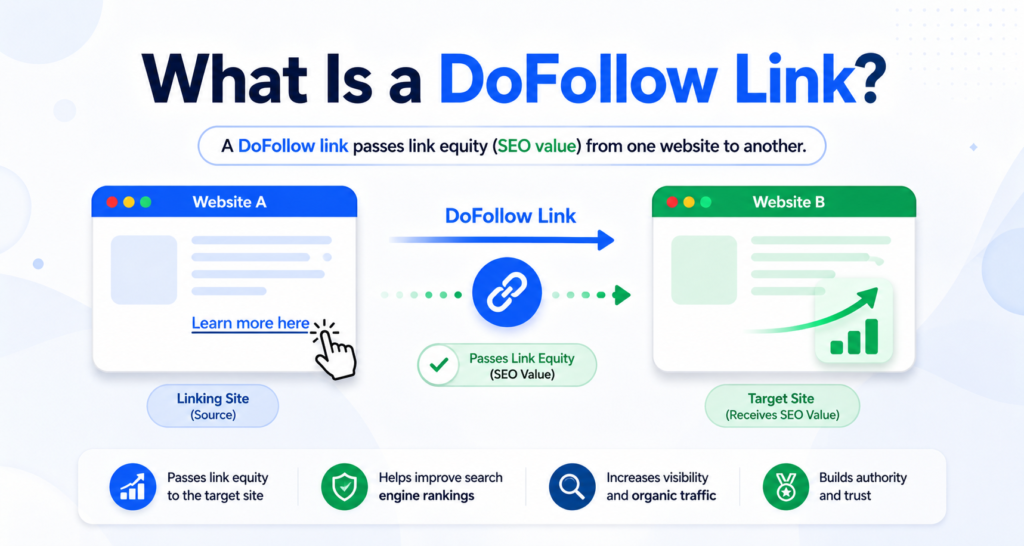
A DoFollow link is a regular hyperlink that allows search engines to pass authority from one website to another.
When Google crawls a DoFollow link, it follows the link and transfers some SEO value, often referred to as link equity or link juice.
Example:
<a href="https://example.com">SEO Services</a>
Since there is no special attribute added, search engines treat this as a DoFollow link by default.
Why Are DoFollow Links Important?
DoFollow links are important because they can directly contribute to improving search engine rankings.
Some major benefits include:
- Passing authority to your website
- Improving keyword rankings
- Increasing domain strength
- Helping pages get indexed faster
- Supporting topical authority
Most businesses focus heavily on acquiring quality DoFollow backlinks because they play a major role in SEO performance.
What Is a NoFollow Link?
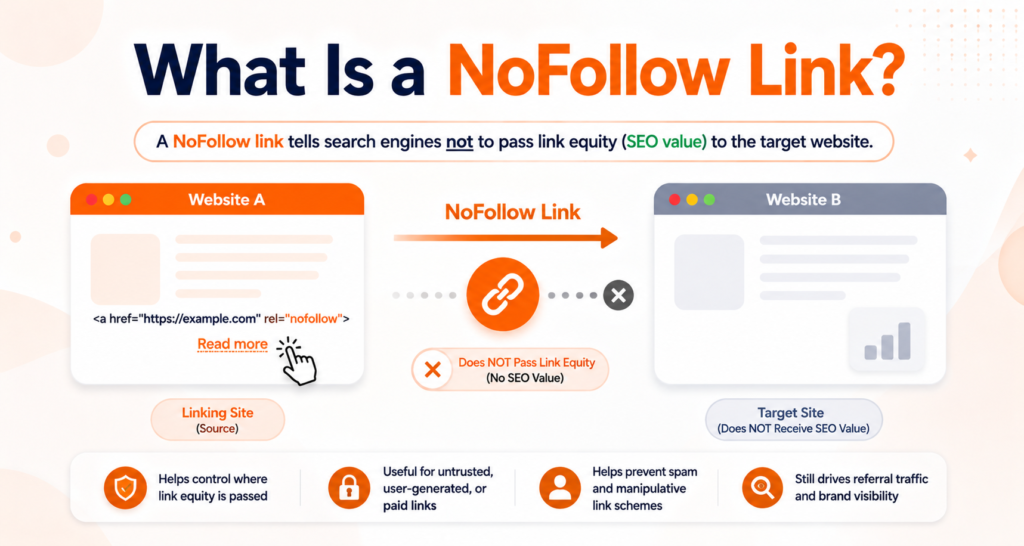
A NoFollow link contains a special attribute that tells search engines not to pass ranking authority directly to the linked page.
Example:
<a href="https://example.com" rel="nofollow">SEO Services</a>
The rel="nofollow" attribute informs search engines that the website owner does not want to endorse the linked page from an SEO perspective.
Why Were NoFollow Links Introduced?
Google introduced NoFollow links to fight spam.
In the early days of SEO, people abused blog comments, forums, and directories by placing links everywhere to manipulate rankings.
The NoFollow attribute helped website owners control which links should pass authority.
Are NoFollow Links Useless?
Absolutely not.
While NoFollow links generally do not pass the same level of authority as DoFollow links, they still provide several important benefits.
NoFollow links can:
- Drive referral traffic
- Increase brand awareness
- Help diversify backlink profiles
- Generate business opportunities
- Create natural link patterns
A website with only DoFollow backlinks may actually appear unnatural to search engines.
Key Differences Between DoFollow vs NoFollow Links
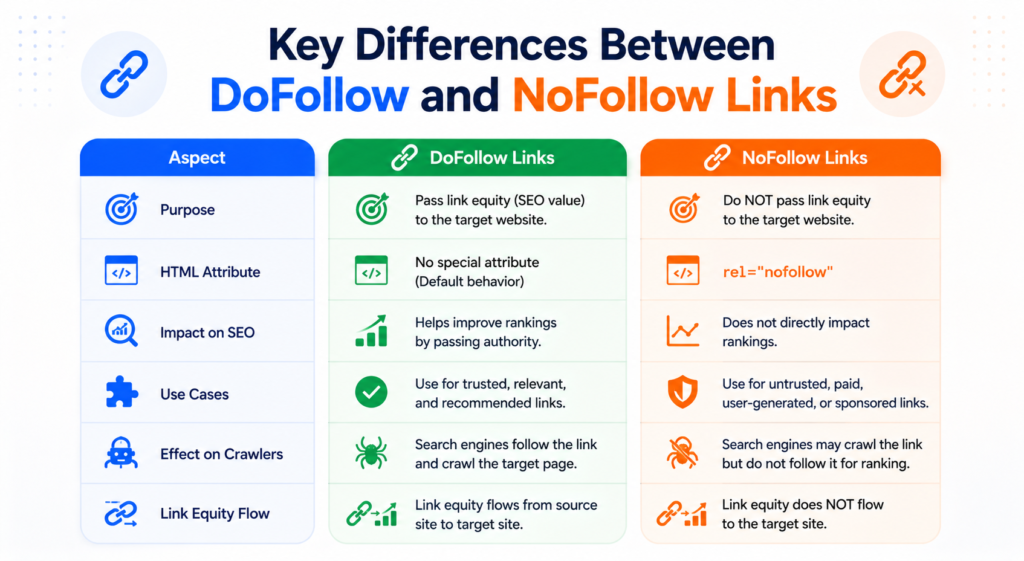
| Factor | DoFollow Links | NoFollow Links |
|---|---|---|
| Pass SEO Authority | Yes | Limited |
| Improve Rankings Directly | Yes | Usually No |
| Send Referral Traffic | Yes | Yes |
| Support Brand Visibility | Yes | Yes |
| Natural Link Profile | Yes | Yes |
Examples of Common DoFollow Links
Most of these backlinks are usually DoFollow:
- Guest post backlinks
- Editorial links
- Resource page links
- Digital PR mentions
- Niche edits
- Industry blog references
These links are often the foundation of successful link-building campaigns.
Examples of Common NoFollow Links
Many websites use NoFollow links by default, including:
- Social media platforms
- Blog comments
- Forum discussions
- Some news websites
- User-generated content sections
- Sponsored advertisements
Even though these links may not transfer significant SEO value, they can still bring visitors and exposure.
What About Sponsored and UGC Links?
Google now recognizes additional link attributes besides NoFollow.
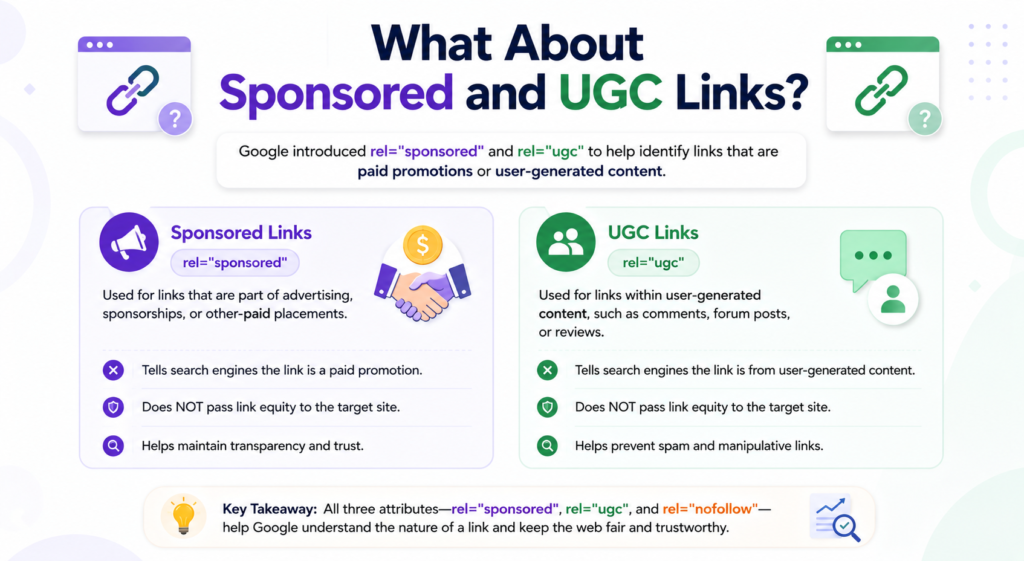
Sponsored Links
Sponsored links identify paid advertisements or paid placements.
Example:
rel="sponsored"
These links should be used when money or compensation is involved.
UGC Links
UGC stands for User Generated Content.
These links are commonly found in:
- Forums
- Blog comments
- Community websites
- User profiles
Example:
rel="ugc"
Which Type of Link Should You Focus On?
The answer is simple:
Focus mainly on quality DoFollow links while maintaining a natural mix of NoFollow links.
A healthy backlink profile usually contains:
- Editorial links
- Guest post links
- Brand mentions
- Directory listings
- Social media links
- Forum mentions
Google expects websites to earn links naturally from multiple sources.
What Is the Ideal DoFollow to NoFollow Ratio?
There is no perfect ratio.
Every industry and website has different backlink patterns.
However, a natural backlink profile often contains:
- Mostly DoFollow links
- A healthy percentage of NoFollow links
- Brand anchors
- Generic anchors
- Contextual links
Trying to manipulate an exact ratio is usually unnecessary.
Can NoFollow Links Become DoFollow Links?
Sometimes yes.
For example:
- A journalist discovers your brand through social media.
- They later mention your company in an article with a DoFollow backlink.
In many cases, NoFollow links create visibility that eventually leads to stronger backlinks.
Common Mistakes to Avoid
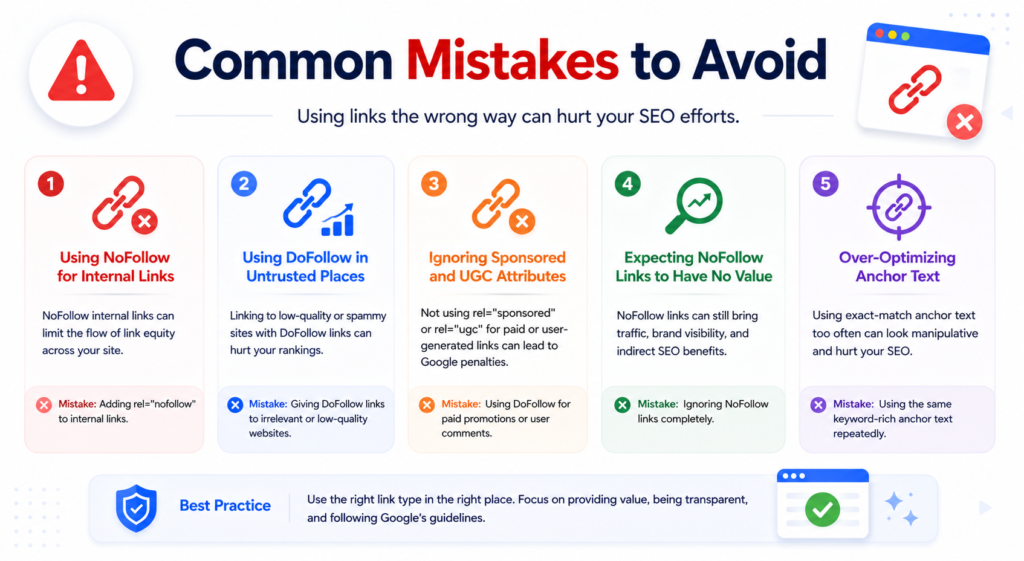
Ignoring NoFollow Links
Many businesses reject NoFollow opportunities even when they can generate valuable traffic and exposure.
Buying Low-Quality DoFollow Links
A poor-quality DoFollow link can be less valuable than a relevant NoFollow mention on an authority website.
Chasing Quantity Over Quality
Ten relevant backlinks usually outperform hundreds of spam links.
Overusing Exact Match Anchors
Using the same keyword repeatedly can create an unnatural backlink profile.
Building a Healthy Link Profile
The best SEO strategy focuses on earning links naturally.
Your backlink profile should include:
- Editorial links
- Guest post backlinks
- Digital PR mentions
- Business citations
- Social media mentions
- Brand references
A balanced approach helps build long-term trust with search engines.
How Backlink Providers Helps Businesses Build Strong Backlink Profiles
At Backlink Providers, we help businesses build a natural backlink profile using ethical and sustainable link-building strategies.
Our services include:
- Guest Posting Services
- High Authority Backlinks
- Niche Edits
- Digital PR Campaigns
- Content Marketing
- Off-Page SEO Services
Our focus is on building quality backlinks that improve rankings while maintaining long-term SEO safety.
Final Thoughts
The debate between DoFollow and NoFollow links is not about choosing one over the other.
DoFollow links play a bigger role in improving rankings, while NoFollow links help create a natural backlink profile, drive referral traffic, and increase brand awareness.
The most successful websites earn both types of links through valuable content, industry relationships, and strong marketing efforts.
Instead of chasing only DoFollow backlinks, focus on building authority, trust, and relevance across the web.
Frequently Asked Questions
What is a DoFollow backlink?
A DoFollow backlink is a standard link that allows search engines to pass authority from one website to another.
What is a NoFollow backlink?
A NoFollow backlink contains the nofollow attribute, which tells search engines not to pass ranking authority directly.
Do NoFollow links help SEO?
Yes. NoFollow links help create a natural backlink profile, drive traffic, and improve brand visibility.
Which is better for SEO: DoFollow or NoFollow?
DoFollow links usually have a stronger impact on rankings, but a healthy backlink profile should contain both types of links.
Are social media links DoFollow?
Most social media platforms use NoFollow links by default.
Can Google crawl NoFollow links?
Yes. Google can still discover and crawl NoFollow links even if they do not pass full ranking authority.
Should I avoid NoFollow backlinks?
No. Ignoring NoFollow backlinks can limit referral traffic and brand exposure opportunities.
Does Backlink Providers offer DoFollow backlinks?
Yes. Backlink Providers provides high-quality, niche-relevant backlink solutions including guest posts, authority backlinks, digital PR, and off-page SEO services.