Not all backlinks carry the same SEO value.
You may receive two backlinks from different websites, but one could significantly improve your rankings while the other may have almost no impact.
This happens because Google does not simply count backlinks. Instead, it carefully evaluates the quality and trustworthiness of every link pointing to your website.
Over the years, Google’s algorithm has become much smarter. Modern SEO is no longer about collecting thousands of links. The focus is now on relevance, authority, trust, and user value.
Understanding how Google evaluates backlinks can help businesses build safer and more effective link-building strategies.
In this guide, we will explain the key factors Google uses to assess backlinks and determine their SEO value.
Why Does Google Evaluate Backlinks?
Google’s main goal is to show users the best and most trustworthy content.
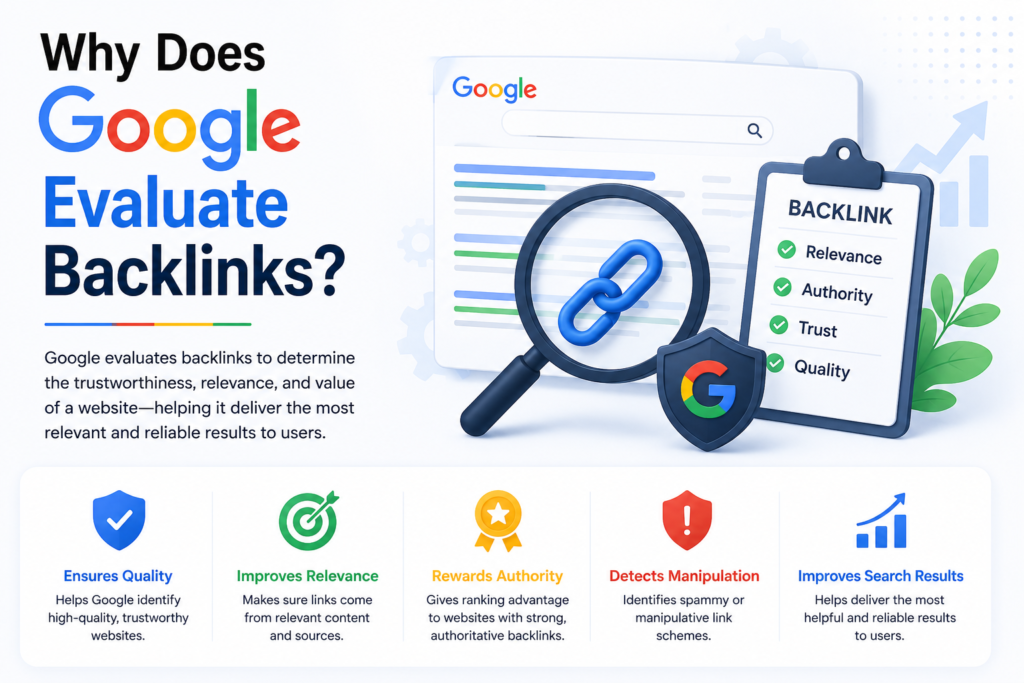
Backlinks high-quality backlinks, help Google understand:
- Which websites are trusted within an industry.
- Which pages provide valuable information.
- Which businesses are recognised by other websites.
- Which content deserves higher rankings.
If Google treated all backlinks equally, spam websites could easily manipulate search results.
That is why Google’s algorithms carefully analyse every backlink before assigning value.
1. Relevance of the Linking Website
Relevance is one of the strongest backlink signals.
Google prefers links coming from websites that are closely related to your industry or topic.
Example:
A backlink to an SEO website from a digital marketing blog is highly relevant.
A backlink to an SEO website from a pet grooming blog provides far less value.
The more closely related the websites are, the stronger the relevance signal becomes.
2. Authority of the Linking Domain
Google pays close attention to the authority and trustworthiness of the website providing the backlink.
Links from established websites usually carry more value than links from newly created or low-quality websites.
Examples of high-authority websites include:
- Industry publications
- News websites
- Government websites
- Educational institutions
- Well-known brands
One backlink from a trusted website can often outperform dozens of links from weaker domains.
3. Context Around the Link
Google analyses the content surrounding the backlink to understand its purpose and relevance.
Links placed naturally within helpful content generally perform better than links inserted without context.
For example:
A link inside an article discussing link building strategies appears natural and useful.
A random link inserted into unrelated content may carry little SEO value.
Context helps Google understand why the link exists.
4. Link Placement on the Page
The location of a backlink on a webpage can influence its value.
High-value placements:
- Main article content
- Research studies
- Guides
- Case studies
Lower-value placements:
- Footer links
- Sidebar links
- Author bio links
- Sitewide links
Links that appear naturally within the main content generally receive more attention from users and search engines.
5. Anchor Text Used in the Link
Anchor text is the clickable text used for a hyperlink.
Google uses anchor text to understand the topic of the linked page.
Examples include:
- Learn more about link building strategies
- Visit our SEO guide
- Read this backlink checklist
A natural mix of anchor text helps create a healthy backlink profile.
Anchor Text Types Google Likes
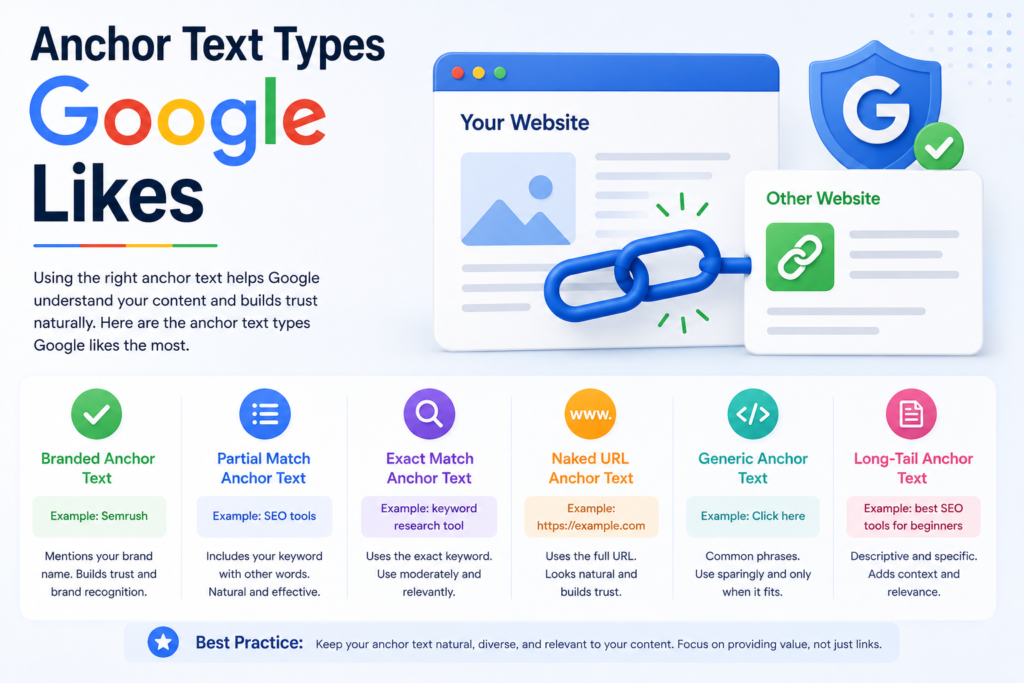
Branded Anchors
Example:
Backlink Providers
Generic Anchors
Example:
Click here
Partial Match Anchors
Example:
Quality backlink services
URL Anchors
Example:
backlinkproviders.com
A natural mix of anchor texts appears more trustworthy.
Anchor Text Practices to Avoid
Repeated use of the exact same keyword can appear manipulative.
For example:
Using “buy backlinks” as anchor text on hundreds of backlinks may trigger spam signals.
Natural variation is always safer.
6. Dofollow and Nofollow Attributes
Google evaluates link attributes to understand how authority should flow between websites.
Dofollow Links
These links can pass ranking value and authority.
Most editorial and guest post links fall into this category.
Nofollow Links
These links usually do not pass direct ranking value but still contribute to:
- Traffic generation
- Brand visibility
- Link profile diversity
A healthy backlink profile contains both types of links.
7. Website Trust Signals
Google analyses various trust indicators before assigning backlink value.
These may include:
- Website history
- Content quality
- User engagement
- Spam score
- Editorial standards
- Industry reputation
Websites with poor trust signals may pass very little SEO value.
Does Traffic Matter?
Although Google has never officially confirmed using website traffic as a direct ranking signal for backlinks, websites with real visitors often provide stronger SEO benefits.
Traffic can indicate:
- Genuine audience engagement
- Higher trust levels
- Better content quality
Backlinks from websites with active audiences can also generate valuable referral traffic.
How Google Detects Manipulative Backlinks
Google’s algorithms have become extremely effective at identifying unnatural link patterns.
Common warning signs include:
- Large numbers of identical anchor texts
- Links from unrelated industries
- Spam directories
- Automated backlinks
- Link farms
- Low-quality private blog networks
Websites that rely heavily on manipulative tactics may experience ranking losses.
What Does Google Want to See?
Google prefers backlinks that are:
- Relevant
- Natural
- Editorially placed
- Helpful to users
- Earned through valuable content
The best backlinks exist because they improve the user experience, not because they were forced into a page.
How Businesses Can Build Backlinks That Google Values
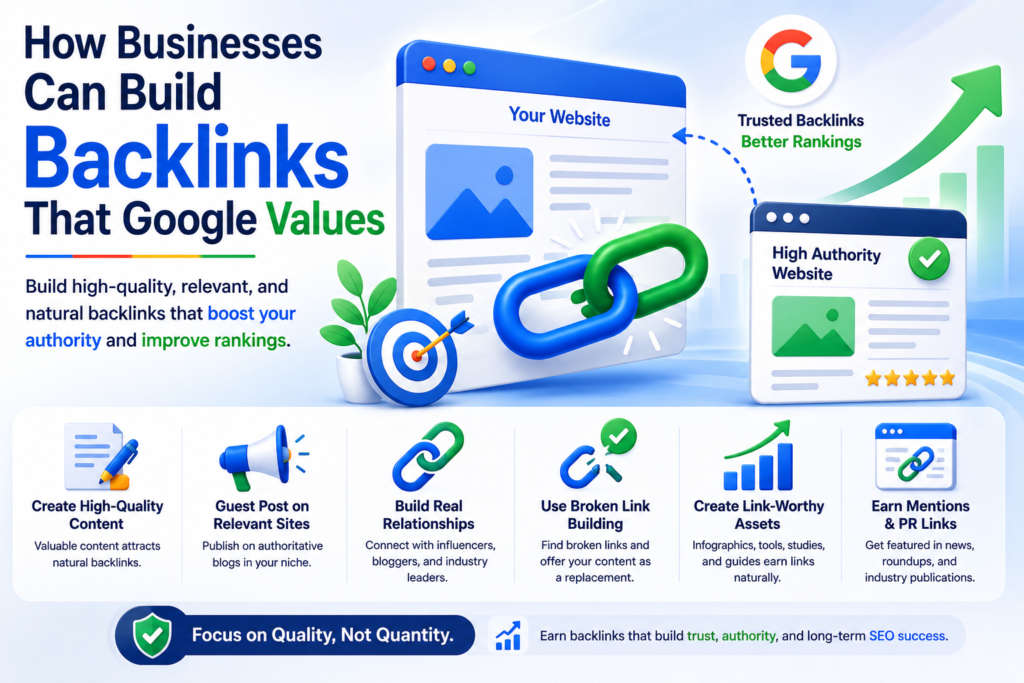
Businesses should focus on:
Creating Helpful Content
Useful content naturally attracts links over time.
Guest Posting on Relevant Websites
Publishing quality content on trusted websites remains highly effective.
Digital PR Campaigns
Newsworthy campaigns can attract high-authority backlinks.
Building Industry Relationships
Strong relationships often create natural link opportunities.
Producing Original Research
Unique data and studies attract editorial mentions and citations.
How Backlink Providers Helps Businesses Build Google-Friendly Backlinks
At Backlink Providers, we focus on building backlinks that align with modern search engine guidelines.
Our services include:
- Guest Posting Services
- Authority Backlinks
- Digital PR Campaigns
- Niche Edit Links
- Local SEO Link Building
- Content Marketing Services
Our goal is to help businesses build sustainable authority rather than relying on risky short-term tactics.
Conclusion
Google no longer evaluates backlinks based on numbers alone.
Modern SEO focuses on relevance, authority, trust, context, and user value.
Businesses that prioritise high-quality, niche-relevant backlinks are more likely to achieve long-term ranking improvements and sustainable growth.
Instead of asking, “How many backlinks do I need?” the better question is, “How many quality backlinks can I earn?”
The websites that win in SEO are usually the ones that focus on building trust rather than simply building links.
Frequently Asked Questions
Does Google still use backlinks as a ranking factor?
Yes. Backlinks remain one of Google’s most important ranking signals and continue to influence rankings in 2026.
Does Google care more about quality or quantity of backlinks?
Google places much greater importance on backlink quality, relevance, and trust rather than the total number of links.
Are backlinks from unrelated websites useful?
They may provide some referral traffic, but highly relevant backlinks generally carry more SEO value.
What is the best anchor text for backlinks?
A natural mix of branded, generic, partial match, and URL anchors creates the healthiest backlink profile.
Are dofollow backlinks more valuable than nofollow backlinks?
Dofollow links generally pass more SEO value, but nofollow links still support branding, traffic, and backlink diversity.
Can bad backlinks hurt rankings?
Yes. Spammy or manipulative backlinks may reduce trust and negatively affect SEO performance.
Does website authority matter when building backlinks?
Yes. Links from trusted and authoritative websites usually provide greater ranking benefits.
Does Backlink Providers provide quality backlinks?
Yes. Backlink Providers focuses on building niche-relevant, authority-driven backlinks that support long-term SEO growth and comply with modern SEO best practices.